
Call us now :08045800043
 Send Inquiry
 Send Inquiry
Battery Test Chambers
Price 100000 INR/ Unit
MOQ : 1 Unit
Battery Test Chambers Specification
- Gas Pressure
- 0~0.8 MPa
- Application
- Testing lithium-ion and other rechargeable batteries
- Features
- Overheat protection, programmable cycles, adjustable shelves
- Interface Type
- RS232/USB
- Frequency
- 50 Hz
- Specimen Size
- Customizable up to 200 mm
- Equipment Type
- Battery Test Chamber
- Measuring Range
- 0-10,000 N
- Mounting Type
- Floor standing
- Temperature
- -40C to +150C
- Display Type
- Digital LCD
- Port Size
- 1 inch
- Power Supply
- AC 220V 10% 50Hz
- Max Height
- 1800 mm
- Test Range
- 1 N to 10 kN
- Operating Voltage
- 220V/50Hz
- Hardness
- HRC 45
- Number of Specimens
- Up to 8
- Accuracy
- 0.01% F.S.
- Automation Grade
- Automatic
- Humidity
- 20%~98% RH
- Response Time
- <1s
- Resolution
- 0.01 N
- Usage
- Battery performance test
- Capacity
- 10 kN
- Machine Weight
- 250 kg
- Test Speed
- 0.1 - 500 mm/min
- Test Width
- 450 mm
- Test Stroke
- 300 mm
- Control Mode
- Programmable/Manual
- Chamber Volume
- 360 Liters
- Battery Compatibility
- Cylindrical, Prismatic, Pouch types
- Calibration
- Automatic and manual
- Data Storage
- Up to 1000 test records
- Color
- Blue-Grey
- Safety Features
- Leakage protector, emergency stop
- Heating Method
- PID Controlled Electric Heater
- Door Type
- Double-sealed viewing window
- Internal Chamber Material
- Stainless Steel SUS304
- Alarm System
- Over temperature & over pressure alarm
- Noise Level
- <65 dB(A)
- Cycle Mode
- Continuous/Timed
- Standards Compliance
- IEC/UL/GB battery testing standards
- Cooling System
- Air Cooling & Forced Refrigeration
Battery Test Chambers Trade Information
- Minimum Order Quantity
- 1 Unit
- Supply Ability
- 1 Unit Per Day
- Delivery Time
- 1 Week
About Battery Test Chambers
Battery Test Chambers are cutting-edge environmental testing tools made to replicate different scenarios in order to assess battery performance. These chambers ensure proper testing of battery durability, capacity, and safety by offering exact control over temperature, humidity, and cycling. They support a variety of battery types, including lithium-ion, lead-acid, and nickel-metal hydride, and are perfect for research, development, and quality control. These chambers, which include dependable sensors and easy-to-use interfaces, aid producers in adhering to industry requirements while boosting product innovation and improving battery safety and lifespan.
Advanced Safety and Reliable Operation
Safety is paramount with features such as leakage protection, emergency stop mechanisms, and a double-sealed viewing window. The chamber's alarm systems actively monitor for over temperature and pressure, enhancing protection during battery tests and ensuring peace of mind for operators.
Versatile Testing for Multiple Battery Types
Compatible with cylindrical, prismatic, and pouch batteries, the chamber allows simultaneous testing of up to 8 specimens. The customizable specimen size and adjustable shelves cater to various battery dimensions, making it ideal for research labs, manufacturers, and quality assurance teams.
Precision Control and Data Management
Equipped with a PID-controlled electric heater, programmable cycles, and digital LCD display, tests are conducted with accuracy and efficiency. The chamber features automatic/manual calibration and can store up to 1000 test records, facilitating robust data analysis and regulatory compliance.
FAQ's of Battery Test Chambers:
Q: How does the Battery Test Chamber ensure safety during operation?
A: The chamber incorporates multiple safety features including a leakage protector, emergency stop, and double-sealed viewing window. Over temperature and pressure alarms add to operational safety, providing real-time notifications and swift responses to hazardous conditions.Q: What types of batteries can be tested in this chamber?
A: This chamber supports testing of cylindrical, prismatic, and pouch battery formats. Its adjustable shelves and customizable specimen size capabilities allow for versatile battery testing across various models, suitable for both lithium-ion and other rechargeable batteries.Q: When should I use automatic versus manual calibration for tests?
A: Automatic calibration simplifies routine testing and ensures consistent accuracy, while manual calibration may be preferred for custom test settings or validation against specific standards. Both options enhance flexibility in meeting diverse testing requirements.Q: Where is this Battery Test Chamber typically installed?
A: Designed as a floor-standing unit, it is commonly installed in factory laboratories, battery manufacturing facilities, and research centers. Its blue-grey finish and robust construction support reliable operation in professional environments.Q: What is the process for storing and retrieving test data?
A: Test data is recorded using the internal digital system, capable of storing up to 1000 test records. Data can be accessed via the digital LCD display or exported through RS232/USB interfaces for further analysis and documentation.Q: How does the chamber benefit battery manufacturers and testing service providers?
A: With accurate, programmable testing cycles and compliance to IEC/UL/GB standards, the chamber offers reliable performance assessment. Automated and manual controls, overheat protection, and efficient data management support quality assurance, accelerating R&D and production processes.Q: What are the usage guidelines for optimal performance?
A: For best results, ensure batteries match compatible formats and specimen sizes. Utilize programmable cycles for repetitive tests, regularly calibrate, and monitor alarm systems for safety. Keep the operating voltage at 220V/50Hz and maintain humidity and temperature within specified ranges for consistent outcomes.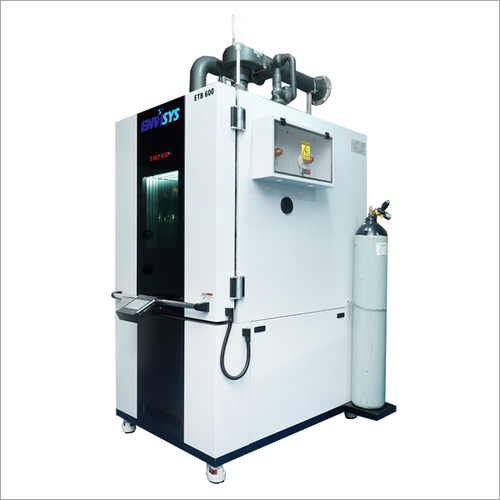
Tell us about your requirement

Price:
Quantity
Select Unit
- 50
- 100
- 200
- 250
- 500
- 1000+
Additional detail
Mobile number
Email

More Products in Battery Testing Environmental Chamber Category
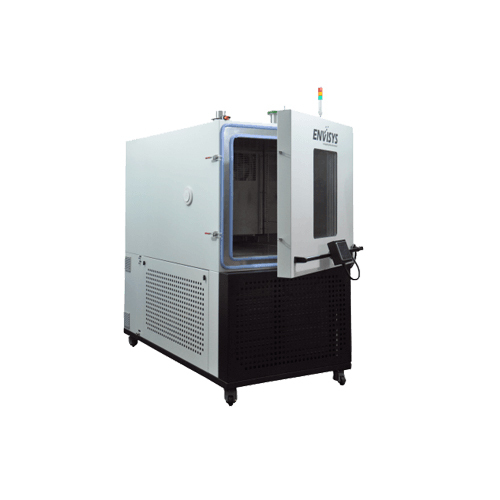
Battery Test Chamber
Price 100000 INR / Unit
Minimum Order Quantity : 1 Unit
Voltage : 120440 Volt (v)
Display Type : Color Touch Controller
Material : Stainless Steel
Product Type : Chambers
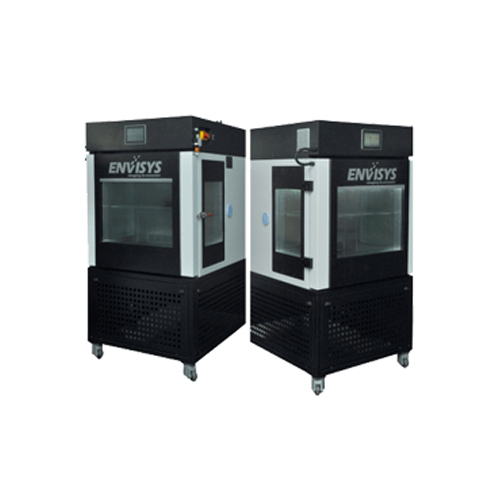
Industrial Battery Testing Chambers
Price 100000 INR / Unit
Minimum Order Quantity : 1 Unit
Voltage : 120440 Volt (v)
Display Type : Digital
Material : Stainless Steel
Product Type : Chambers

Battery Testing Environmental Chamber
Price 100000 INR / Unit
Minimum Order Quantity : 1 Unit
Voltage : 220440 Volt (v)
Display Type : Color Touch Controller
Material : Stainless Steel
Product Type : Chamber

 Send Inquiry
Our Products
- Environmental Test Chamber
- Salt Spray Chamber
- Dust Chamber
- Rain Chamber
- Walk-In-Environmental Chambers
- Custom Built Chamber
- Altitude Chambers
- Vibration Chamber
- UTM Environmental Chamber
- Thermal Shock Chamber
- Industrial Chiller Chambers
- Battery Testing Environmental Chamber
- Industrial Oven & Dryer
- Environmental Test Chamber Services
- Razor Blade Treatment Chambers
- Temperature Forcing System
- Battery Testing Chamber
- Custom-Built Chambers
- Dust Chambers
- Environmental Test Chambers
- Industrial Chillers
- Razor Blades Treatment Chamber
- UTM Interface Environmental Chambers
- Walk-in Environmental Chamber


SB-118, 3rd Cross Road, 1st Stage, Peenya Industrial Estate, Bengaluru - 560058, Karnataka, India

Mr ANIL KUMAR KOTTANI
(Proprietor)
Mobile :08045800043
 Send Inquiry
 Send SMS
 Call Me Free
Developed and Managed by Infocom Network Private Limited.
